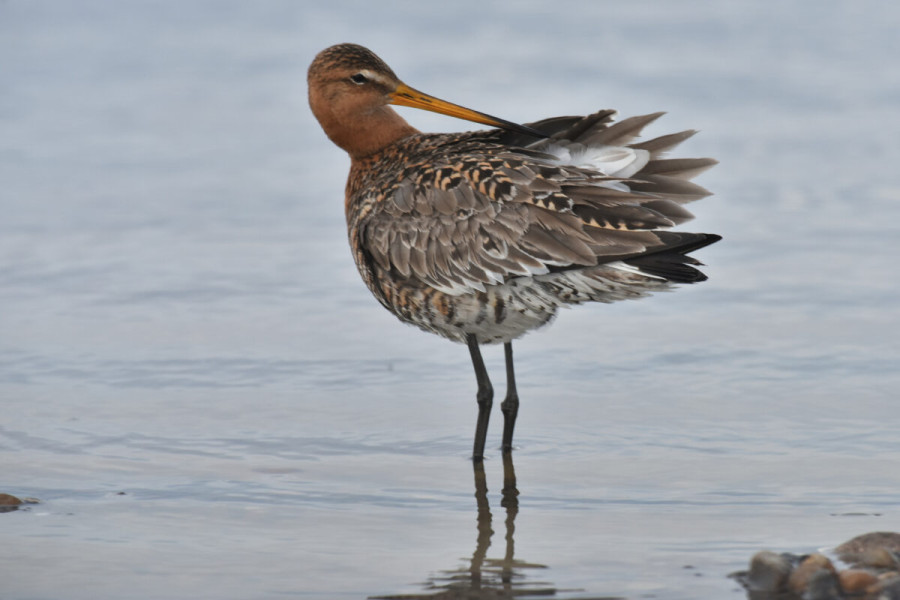
Every year, millions of birds travel along the East Atlantic Flyway, passing through the Wadden Sea, which is one of the most important "stopover sites". Learn more about the birds of the Wadden Sea and their importance to human communities and well-being – and about the impact humans have on the birds’ habitats and well-being.
The relationship between birds and humans
In the first part of this event, we’ll gain an insight into how birds help to strengthen human communities and well-being. We’ll hear what we actually know about the birds in Blåvand – and how voluntary activities can create better living conditions for both people and birds.
Nature guide Bent Jakobsen, former head of the Blåvand Bird Station, Danish Ornithological Society, will share insights into ornithologists’ knowledge of the migratory birds that pass through Blåvand, and how they collect data.
Performance artist Faun Vium and sculptor Therese Bülow introduce the audience to the story behind their performance The Eggs, which they have created for Bringing In The Tide. The artists will contribute to the themed evening with a reading and a sing-along.
Perspectives on protecting the Wadden Sea as habitat
The second part of the themed evening looks at the Wadden Sea as a habitat for birds and how modern humans relate to nature as a phenomenon, a resource and a value. As a UNESCO World Heritage Site, the Wadden Sea is strictly protected – yet it remains a natural area heavily impacted by human activity. How can we best protect the birds from humans?
Visual artist Juha Pekka Matias Laakkonen discusses the concept behind the process-based work Blackbirding, which he performs every day during the exhibition period. The work’s title is inspired by the blackbird’s foraging behaviour and also refers to Pacific island communities enslaved by the British in the 19th century. The work is a humorous and critical commentary on the modern view of nature and humanity’s relationship with it.
Karsten Laursen, an expert on the birdlife of the Wadden Sea and former senior lecturer in faunal ecology at the Department of Ecoscience, Aarhus University, provides insight into the current knowledge of migratory birds such as the oystercatcher, Little Stint and Icelandic Sandpiper in the Wadden Sea – and the impact of human activities on their living conditions – today and in a future where climate change is altering the Wadden Sea, and how can we best protect them?
INFO
The theme evening will be held in English. Participation is free of charge. Registration is required. Registrate at aann@varde.dk
The event is organised in collaboration with the Wadden Sea National Park and the Blåvand‑Ho Residents’ Association as part of The Great Bird Migration.
Location
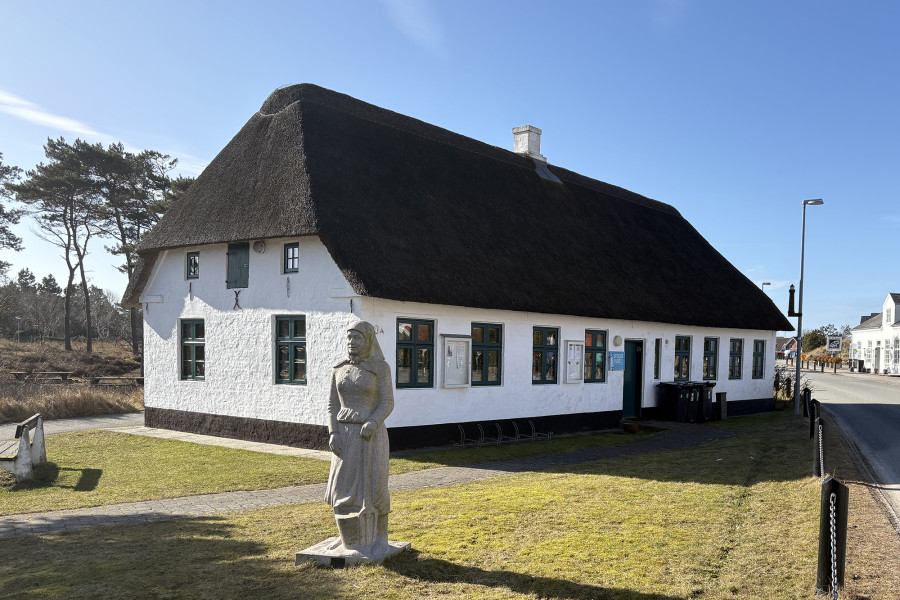
Borgerhuset, Blåvandvej 35-37, 6857 Blåvand