
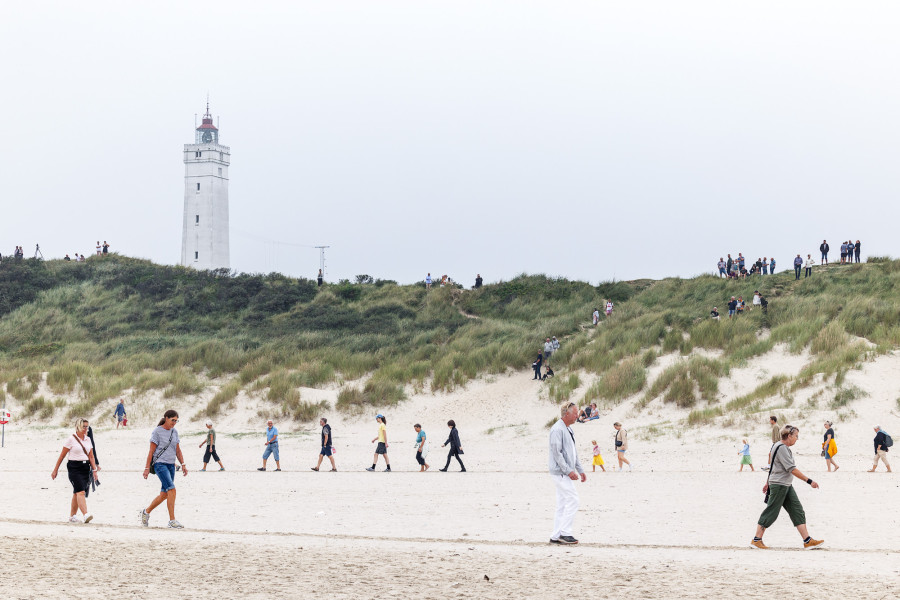
Everything is transient. Everything changes over time.
Mountains and rocks erode and become grains of sand.
Wind and ocean currents move the sand across oceans.
It settles into vast landscapes.
Places come into being and disappear again.
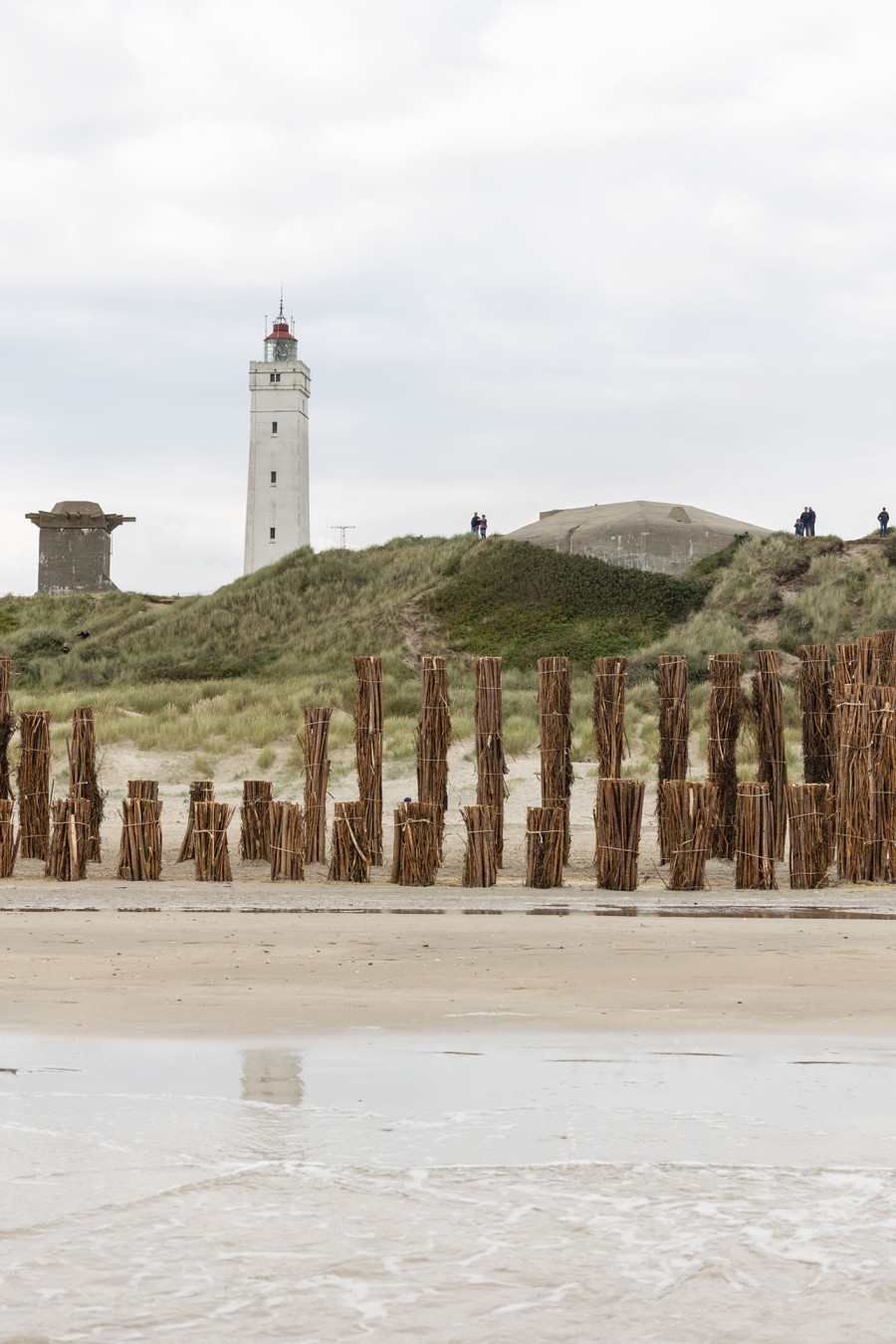
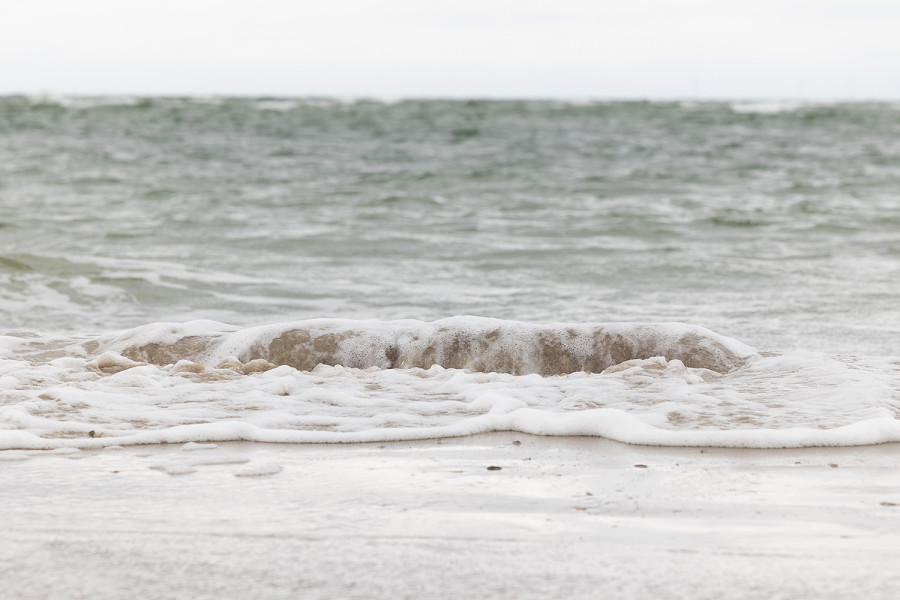
Four times a day, the tides draw a billion cubic meters of water through the Wadden Sea, moving mud and sand and creating tidal flats and sandbanks. Denmark’s westernmost point, Blåvandshuk, is a place that is formed anew each day.
The exhibition’s title First There is a Mountain draws attention to the fact that everything around us is in constant transformation. The expression is central to Buddhist thought and points to how we as humans perceive and understand our habitat and the world around us.
First there is a mountain,
then there is no mountain,
then there is
An Exhibition About Sand
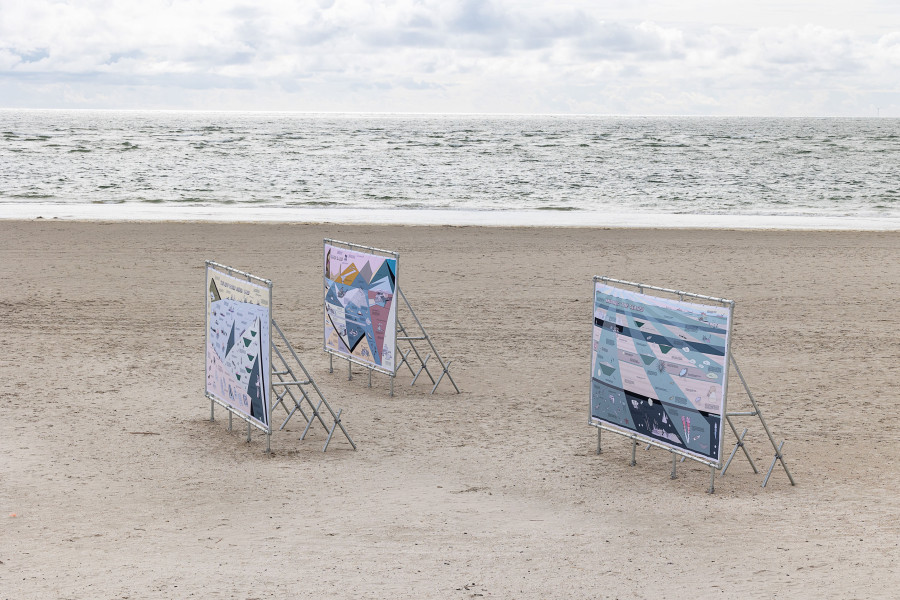
Across three themes, First There Is a Mountain highlights the significance of sand for us as humans—locally within the culture and nature of the Wadden Sea, historically and in the future, and globally as a diminishing natural resource.
A Historical Marker
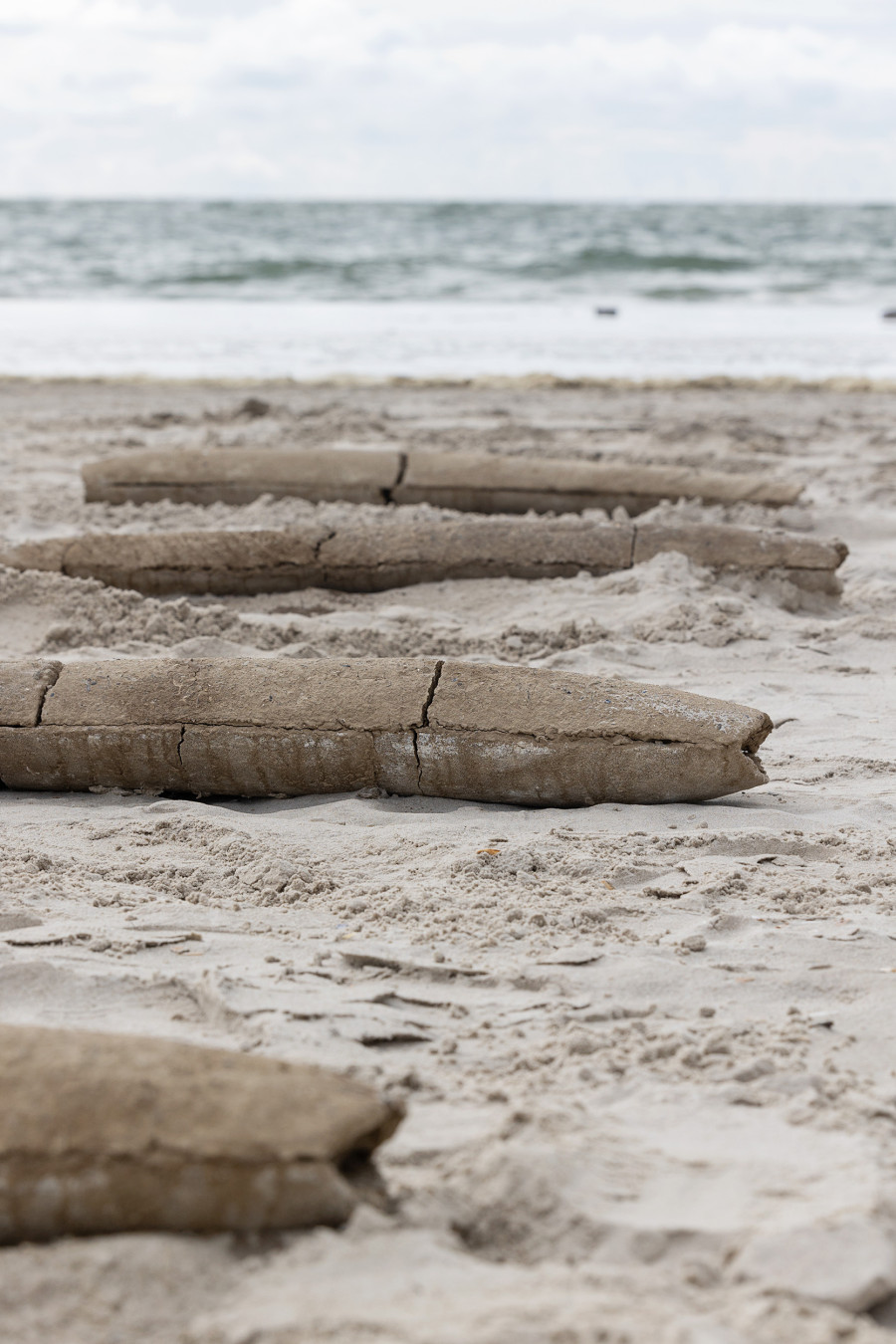
Blåvandshuk, the northernmost part of the Wadden Sea, emerged 2,000–3,500 years ago, when the islands of Langli, Fanø, and Rømø eroded away, only to reappear approximately 1,500 years later. Since then, people have lived along the coast, adapting to the shifting rhythms of tides and winds. Plantations have been established to keep sand from encroaching on farmland, while the sandy seabed a few kilometres offshore is protected.
A Sensory Material
Most people have played with sand. It may appear white, grey, brown, or black, yet up close it contains a spectrum of colours. Danish beach sand consists of approximately 95% quartz, carried here during the Ice Age. Sand is constantly shifting, yet it never disappears and instead becomes a habitat—above the water for sandhoppers and insects, and within the tidal flats for lugworms, mud shrimp, mussels, and fish.
A Valuable Resource
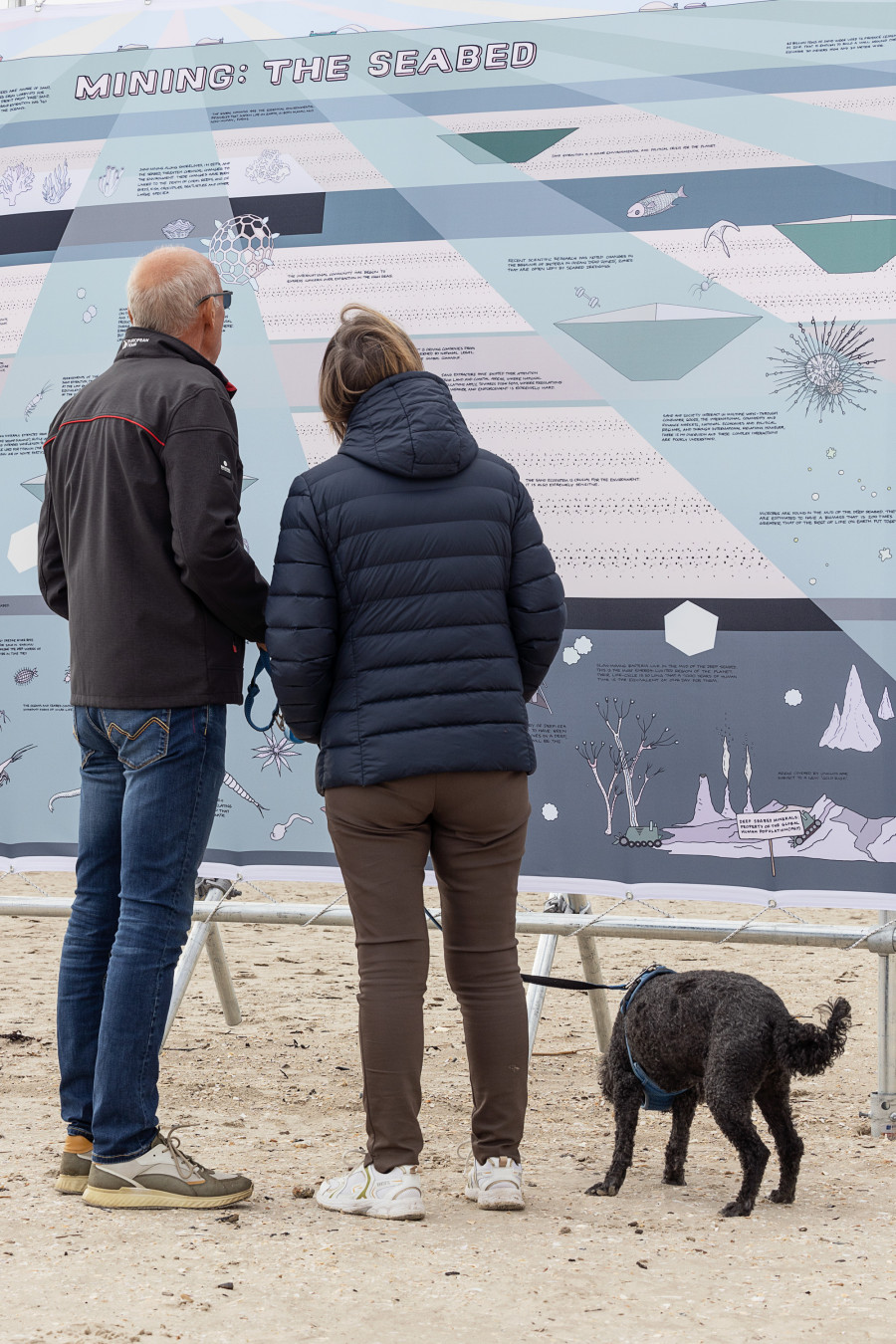
Some sand is extracted for use in construction materials, while other sand is used for land reclamation projects on both a local and global scale. As this valuable resource becomes increasingly scarce, it simultaneously spreads across drought-affected regions. As an essential component in concrete, coastal protection, and natural processes, sand is quickly drawn into political agendas—both locally and globally.
Artistic Interpretations of Sand
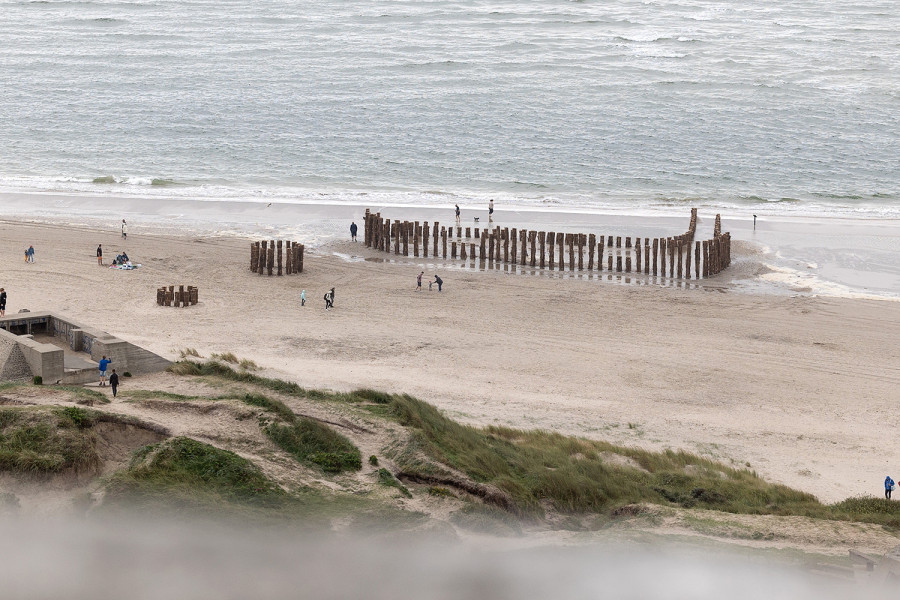
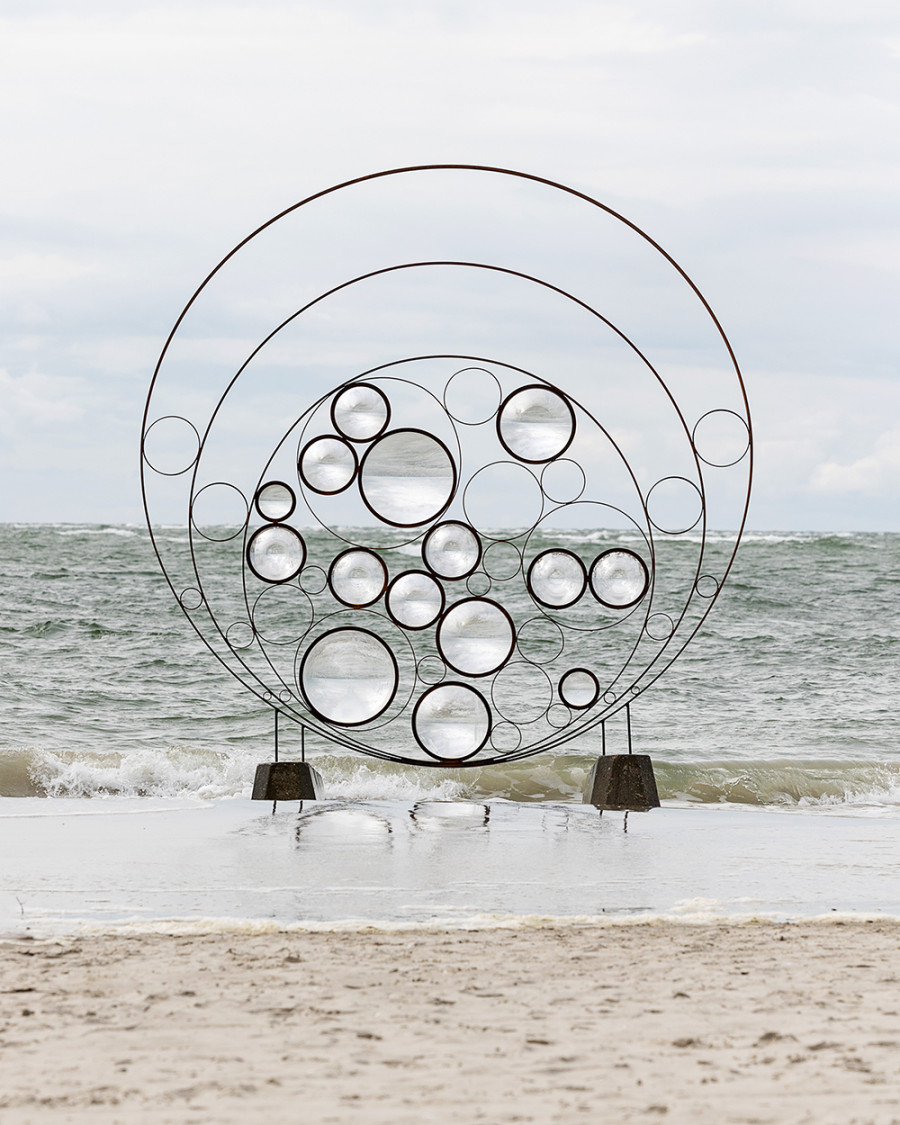
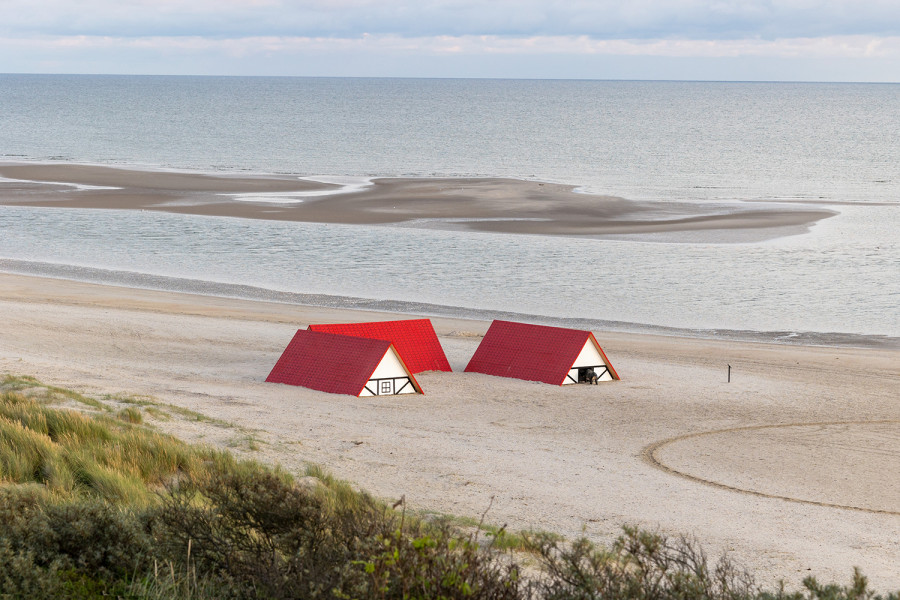
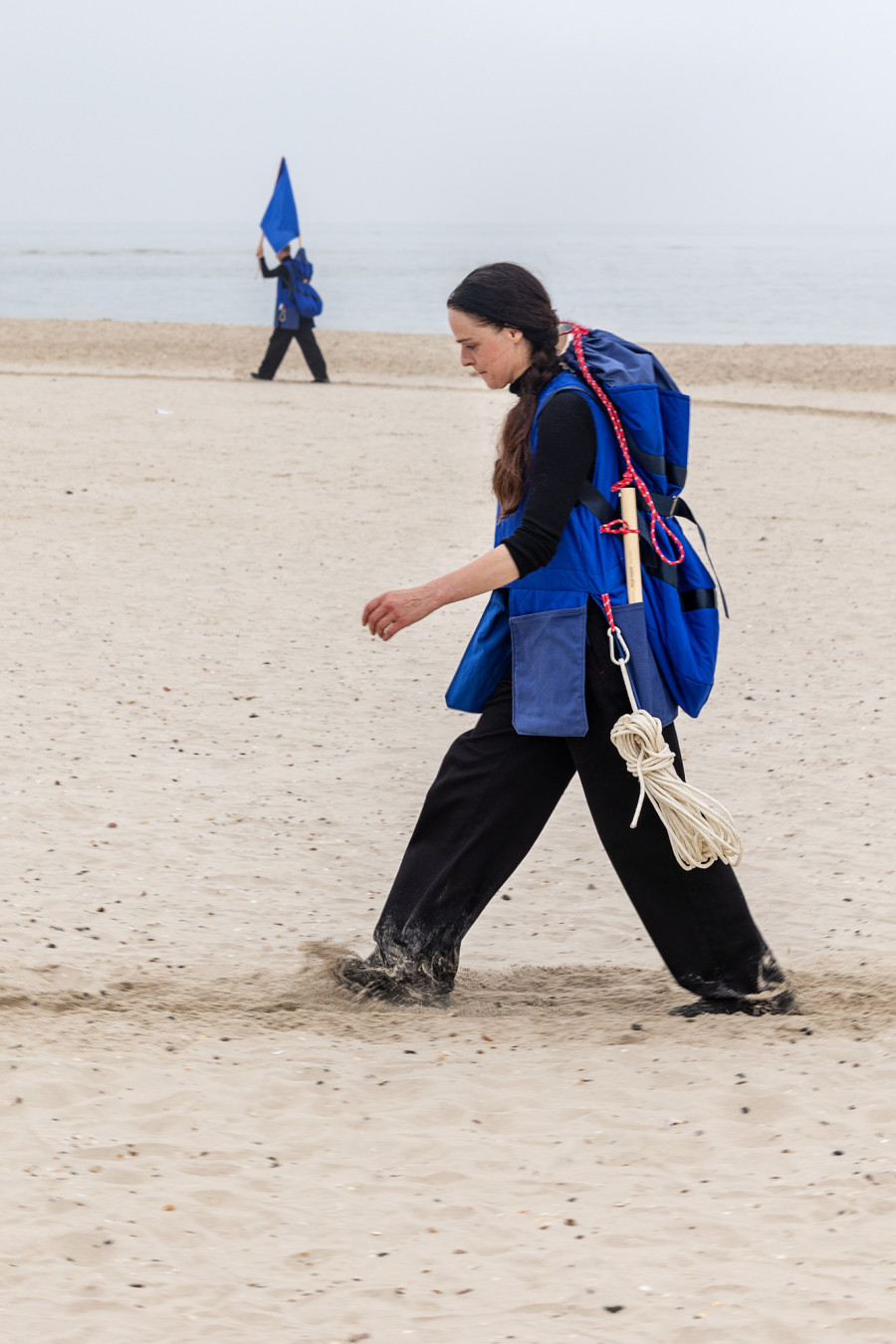
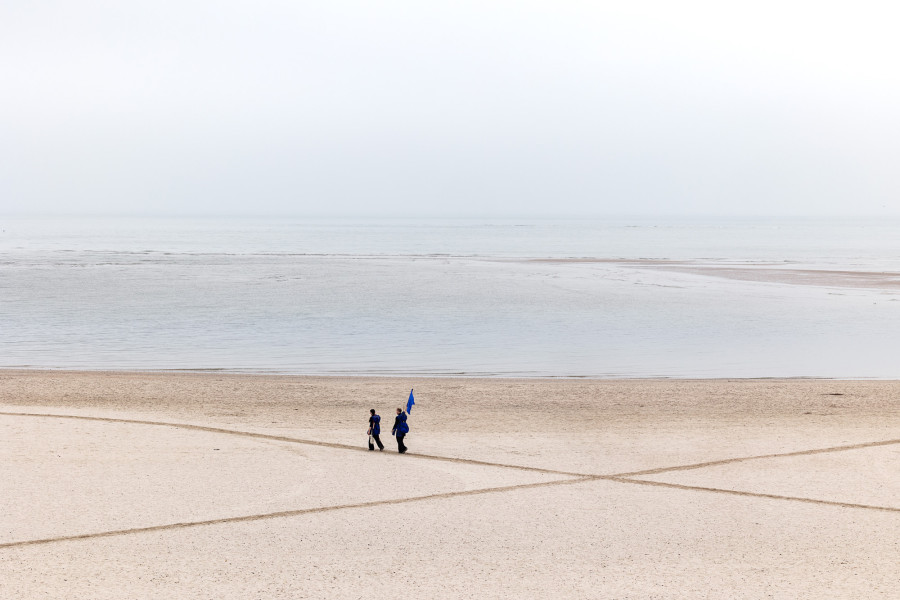
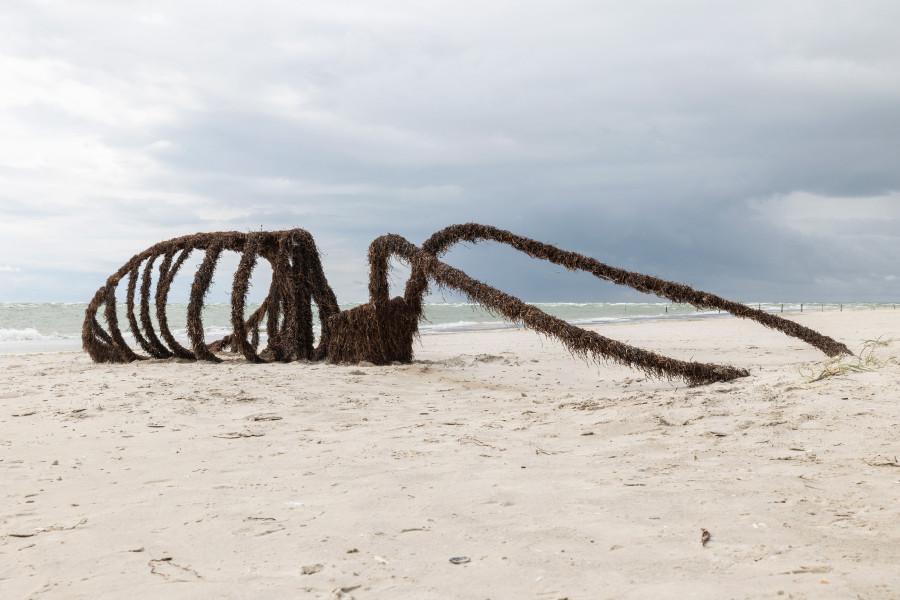
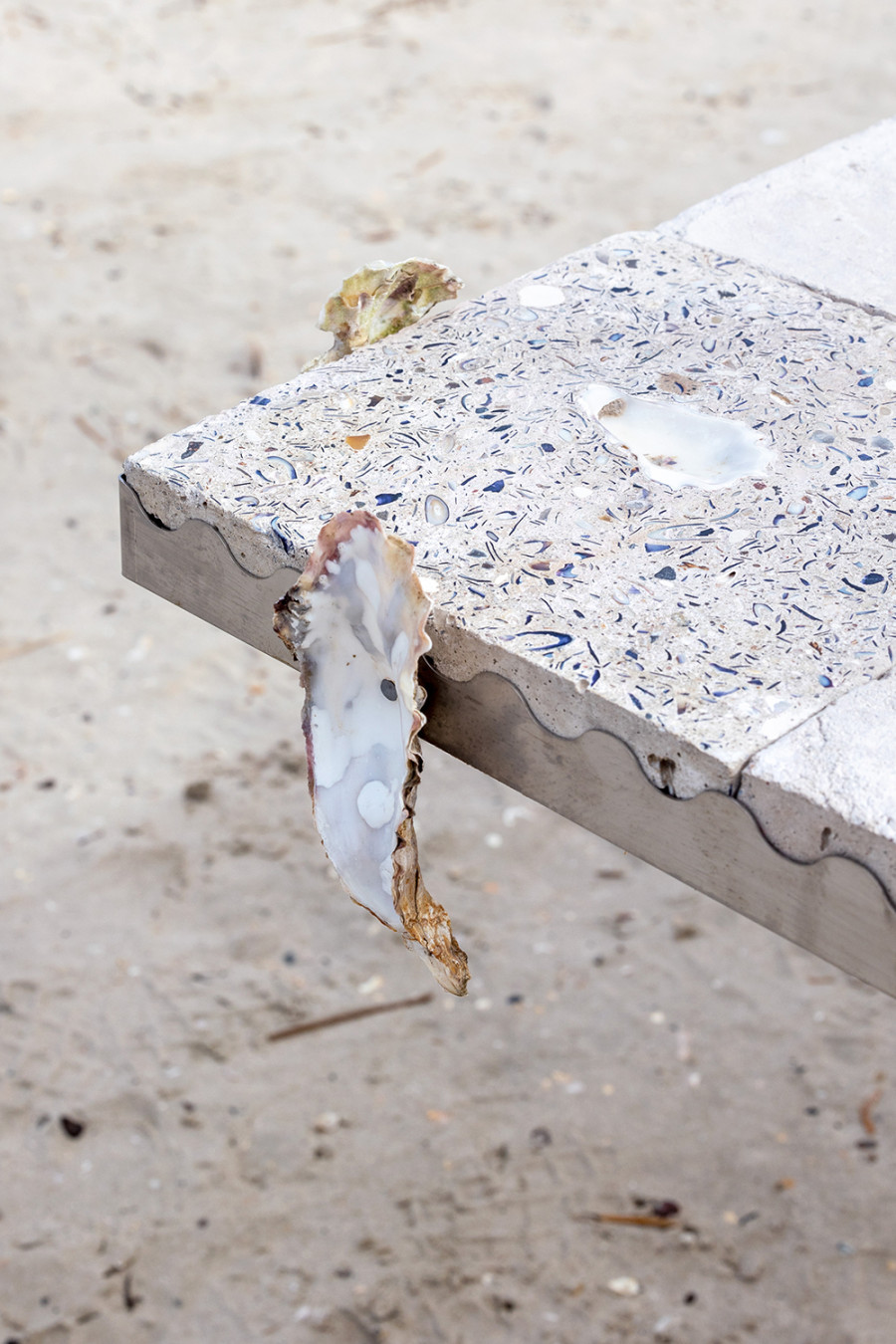
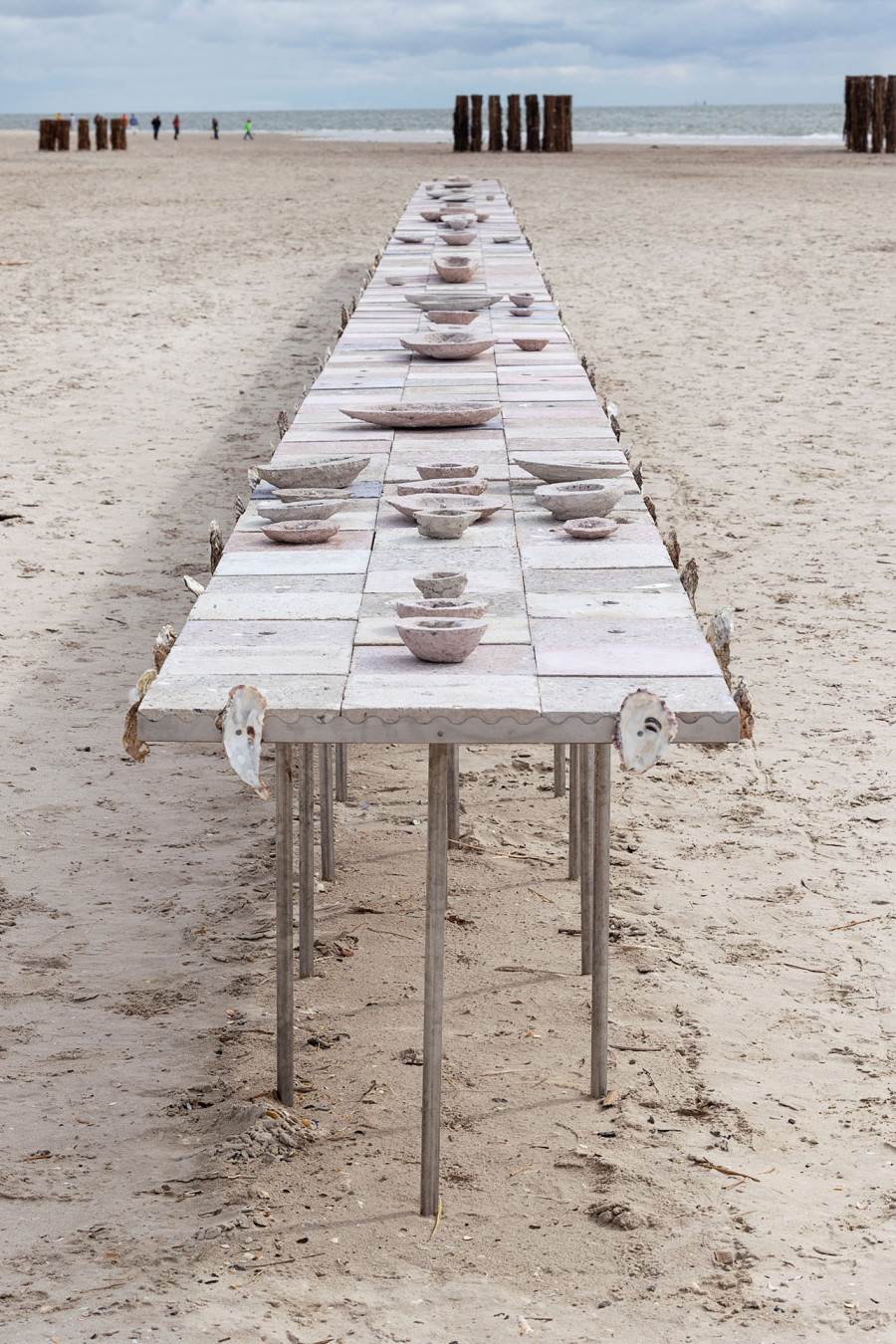
Seven artists and two artist groups from Denmark interpreted sand and created site‑specific works for First There Is a Mountain—ranging from monumental sculptures and poetic installations to artistic research, sensory culinary experiences, and captivating performances.


INFO
The Municipality of Varde presented First There Is a Mountain, Wadden Tide 2023 in collaboration with the Wadden Sea National Park, Destination Vesterhavet, Vardemuseerne, Nature Park Vesterhavet, and Blåvandshuk Business Association.
First There Is a Mountain was curated by Empathic Environments by Stenka Hellfach and Tyra Dokkedahl. Participating artists included Hanne Nielsen & Birgit Johnsen, Kåre Frang, Kasper Hesselbjerg, Kirstine Roepstorff, Molly Haslund, Rasmus Myrup, Rikke Luther, Spacegirls, and Tue Greenfort.
The exhibition and its public programme were made possible with support from the 15 June Foundation, the Jutland Art Foundation, the Danish Arts Foundation, the Augustinus Foundation, Blåvandshuk Activity Centre, the Region of Southern Denmark, the Cultural Region of Central and Western Jutland, the Wadden Sea National Park, and the Art Committee of Varde Municipality.